
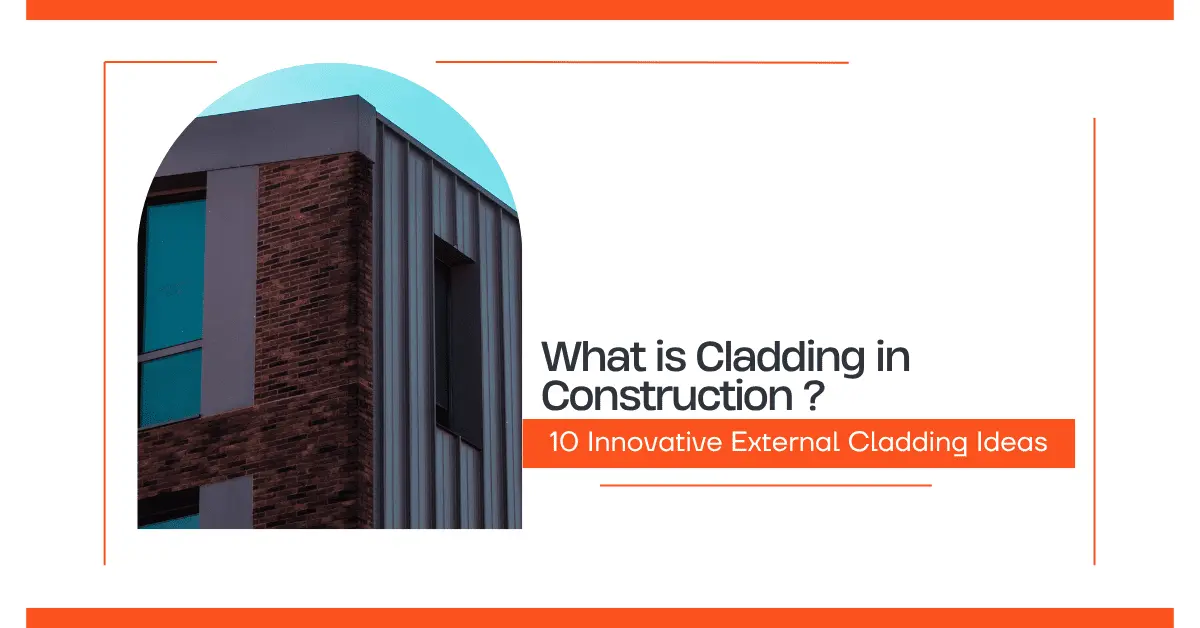
If you are looking at the sleek facade and textured surface then you are looking at cladding. A homeowner planning a renovation or an architect exploring modern exterior finishes. You need to explore this guide that covers everything you need to know. It has explained from the basic cladding definition to the most innovative ideas that are shaping construction.
READ THIS DETAILED GUIDE ABOUT CLADDING IN CONSTRUCTION AND THE 10 INNOVATIVE EXTERNAL CLADDING IDEAS!
What is Cladding in Construction?
If you are searching for “what is cladding?” or “what does cladding mean?”, the simple answer is:
It is the application of one material over another to provide a protective outer layer to a building.
It is a separate system which is applied to the exterior. You can think of it as the building’s overcoat.
To define cladding more accurately, it is a non-load-bearing layer fixed to the primary structure of a building. The main purpose is to protect it from environmental exposure. It can be rain, wind, etc.
Some people also search for what is the meaning of cladding in a broader architectural sense?
It covers the entire building envelope design philosophy. This means:
- how a structure interfaces with its surroundings
- how it performs thermally and acoustically
- how it presents itself visually
Keep in mind that cladding in building construction is necessary for its functions and looks.
So, what is cladding on a building in practical terms? It includes everything from timber boards and metal panels to glass curtain walls and fibre cement sheets. All have only one purpose of protecting the structure.
Why Does Cladding Matter?
Cladding construction matters a lot but people do not realize. That is why you need to look into the following main reasons:
- Weather protection
- Thermal performance
- Acoustic control
- Fire resistance important in multi-storey building cladding
- Aesthetics
- Quality external cladding adds value to the property.
What are the Types of Cladding in Construction
To make the right decisions, you need to understand all types of cladding in construction.
The main categories include:
- Timber cladding is natural and warm
- Metal cladding panels
- Fibre cement cladding is durable and low maintenance
- Stone veneer exterior is luxurious
- Brick slip systems
- Rainscreen cladding systems
- Composite and WPC
- Living green walls
Each one of them is included under exterior wall systems. However, the right choice depends on your budget and building type.
10 Innovative External Cladding Ideas
1. Metal Cladding Panels
Metal cladding panels are one of the most popular choices in contemporary architecture. It uses aluminium and steel to deliver a modern and sleek facade.
These systems consist of panels that are lightweight. But they are structurally very strong. The clean lines make them suitable for a modern appearance.
Commercial and residential owners use it from minimalist retail façades to modern Scandinavian homes.
2. Timber Cladding
Timber cladding for modern projects is thermally modified wood. It has changed how we use timber on exteriors.
Thermally modified wood has become one of the favourable building materials for lots of architects.
Moreover, it is a perfect material for outdoor applications. Like timber cladding and decking. This offers best dimensional stability. Moreover, one can use it for various weather conditions.
3. Fibre Cement Cladding
Fibre cement cladding is mostly used in modern wall cladding.
Actually, it copies the appearance of wood and stone which offer the best resistance to moisture and insects.
It is lightweight and easy to install! Plus it is ideal for diverse climate conditions due to fibre cement panels.
If you are exploring house cladding ideas under budget, you can install it.
4. Rainscreen Cladding Systems
Rainscreen cladding systems is one of the reliable methods for exterior wall systems design.
A ventilated cavity is present between the outer cladding layer and the building’s insulation.
This allows moisture to drain. Plus it also helps air to circulate. No more risks of damp penetration!
5. Brick Slip Systems
Brick slip systems offer the warmth and the look of traditional brickwork. In this approach, thin slices of real brick are combined to a panel and fixed to the exterior wall systems.
This approach is popular for retrofitting older buildings!
6. Stone Veneer Exterior
A stone veneer exterior shows the luxury of natural stone.
It includes:
- Granite
- Slate
- Limestone
- Sandstone
Natural stone cladding delivers a premium exterior finish.
7. Fibre Cement
It combines different materials like wood-plastic composite (WPC) with stone, or metal with wood.
This approach adds texture that allows for creative expression.
It is quite important for contemporary building envelope design.
This allows architects to delineate floors, zones, etc. however, the pairing of fibre cement cladding with timber is quite effective to achieve a modern aesthetic look.
8. Sustainable Cladding Materials
These are quickly becoming the industry standard.
Cork cladding is one of the best options available. It combines natural aesthetics and thermal insulation which is strong.
Wood-plastic composite is another standout. It mixes recycled plastic with natural fibres. This makes it a strong product that is waterproof and UV-resistant, and maintenance-free.
9. Smart Cladding Technology
In Smart cladding technology, metal cladding panels are connected with sensors that monitor temperature and air quality.
Some metal cladding systems are also being designed to include photovoltaic cells. It generates electricity from sunlight.
Self-cleaning coatings are also being applied to cladding surfaces.
This reduces maintenance requirements.
10. Living Green Walls
Living green walls represent one of the most impactful changes in external cladding.
Vertical gardens are installed in the exterior by using modular planting systems. This creates a living surface that improves air quality.
Moreover, eco-friendly materials are also common. They are durable, and recyclable.
Plus, fire-rated external cladding is also important. When evaluating any cladding materials comparison, always check the fire rating of both the cladding panels.
In addition, textured architectural panels deserve a special mention! Because it is achieved through embossing or natural finishes.
Conclusion
In short, if you’re just learning about cladding in construction, one thing is clear that exterior cladding does much more than just protect a building from the weather. Today, it is essential for keeping buildings warm. It keeps them safe from fire. Plus, it gives them a unique and modern look.