
Written by Cari Melone: Xactimate-Certified Estimating Professional | Published: July 2026 · Reviewed for accuracy against Xactware’s current pricing and line-item standards
Xactimate estimating is how insurance companies and contractors figure out the cost to repair or rebuild a property after damage from fire, water, wind, or storms. It uses one software system, so adjusters, contractors, and public adjusters all price a claim the same way. That’s why an Xactimate estimate contains a mix of codes and numbers. Each person trained on the software reads and understands those codes the same way.
What Is an Xactimate Estimate?
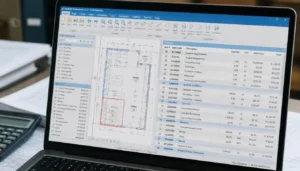
An Xactimate estimate is the process of pricing repair work using Xactimate, a software program built by Xactware, part of Verisk. It is used to estimate costs for restoration jobs, insurance claims, and new construction.
The software has been around since 1986, which is a long time for any estimating tool. Today, most insurance adjusters rely on it. MagicPlan reports that 75% to 80% of adjusters use Xactimate to estimate claim-related restoration work. Restoration Estimating states that about 99% of insurance carriers use this estimating software as their main pricing tool. That’s why Xactimate estimating matters so much in this industry.
What Does It Take to Write a Proper Estimate?
An accurate estimate requires two things: the right line items for the actual damage and the right pricing attached to each of those items. Get either one wrong, and the whole estimate is off, even if the other half is done well. The person running the software is the one responsible for making sure both pieces are correct, since Xactimate itself won’t catch a mismatch between the scope and the price.
This is where a lot of estimates fall short. The result looks complete on paper, but the final cost can still be lower than the actual cost of the repairs. This is one of the main reasons contractors and public adjusters increasingly turn to professional Xactimate estimating services rather than handling estimates in-house. A trained estimator helps catch missing items, pricing errors and other gaps before they lead to unexpected cost increases.
How Does Xactimate Estimating Work?

Xactimate estimating works by taking a measured scope of loss and damaged area, preparing documents for an insurance claim and then matching that information to a regional price list that updates every month. Then the software calculates the total repair cost.
The basic, step-by-step process is given below:
- Document the damage: Use photos, notes, and moisture readings if it’s a water loss. This information becomes part of the insurance claim documentation.
- Build a sketch: The room or building gets measured and drawn to scale, so square footage calculates on its own.
- Pick line item codes: Each task such as tearing out drywall, replacing shingles or running a fan gets matched to a specific code in the Xactimate database.
- Apply local pricing: The software pulls current prices for that property’s region. Xactimate covers pricing of more than 470 geographical regions, and it has always updated regional prices.
- Calculate the total cost by adding repair costs: The estimate finds replacement cost value (RCV), subtracts depreciation, and gets the actual cash value (ACV).
It is important to understand the difference between an estimate and a quote. The difference between them is given in the table below:
| Point | Estimate | Quote |
| What it is | An approximate cost based on the information available at the time | A fixed price for a clearly defined scope of work |
| Can it change? | Yes, it can go up or down if more damage is found once work starts | No, once agreed, the price usually stays the same |
| Based on | Visible damage, initial inspection, assumptions | A confirmed scope of work, agreed in advance |
| Flexibility | Flexible, adjusts as new information comes in | Fixed, binding once accepted |
| Best used when | The full extent of damage isn’t known yet (e.g., insurance claims) | The job scope is clear and won’t change (e.g., simple repairs) |
| Risk | Final cost may differ from the original number | Final cost matches what was quoted |
What Do the Line Item Codes Mean in an Xactimate Insurance Estimate?

All Xactimate estimates are made from line items. Each line item code on an Xactimate estimate tells you the trade, the task, and the material. These codes tell the software what the action is, what material is involved, and how it should be priced.
Xactimate sorts line items by the type of work being done like roofing, siding, plumbing, and painting. These are called trade groups. The number of trade groups on a job can decide whether overhead and profit get added to the estimate. Each trade group uses a specific prefix to represent a trade.
| Prefix | Trade / Category |
| RFG | Roofing |
| SDG | Siding |
| DRW | Drywall |
| FLR | Flooring |
| PLM | Plumbing |
| ELC | Electrical |
| PNT | Painting |
| WTR | Water mitigation |
| GNL | General / Demolition |
| CLN | Cleaning |
For example, in an RFG300, the number after the prefix points to a specific task, like tearing off and replacing shingles.
A simple water damage claim might only touch one or two trade groups, like drywall and painting. A bigger storm claim can pull in five or six, covering roofing, gutters, siding, painting, and interior repairs all at once. The more trade groups on a job, the more likely it is that a general contractor is needed to manage the work.
What Line Item on the Xactimate Actually Shows?
Each line item on the estimate usually shows the following:
- Description: What the task is, such as remove/replace shingles
- Quantity: The amount of products (in square feet, linear feet, hours, or units).
- Unit price: The local cost per unit for labor and material
- Tax: Sales tax, which changes by state
- O&P: Overhead and profit
What If O&P Is Missing From Your Estimate?
If your estimate covers several trades and O&P isn’t listed anywhere, that’s usually a sign the estimate is short. It’s one of the most common issues restoration contractors catch and fix through a supplement.
What Is the Difference Between RCV and ACV in Xactimate?

RCV is the full cost to replace something with new material of the same kind and quality. ACV is that same number after depreciation gets taken out.
| Point | RCV (Replacement Cost Value) | ACV (Actual Cash Value) |
| What it means | The full price to replace the damaged item with a new one of the same kind and quality | RCV minus depreciation — what the old, worn item was actually worth |
| Does it include depreciation? | No. It’s the price before anything gets subtracted | Yes. Depreciation is already taken out |
| Which number is bigger? | Always the higher number | Always the lower number |
| When do you get this money? | Only after repairs are finished, if your policy allows recoverable depreciation | Usually paid first, right after the claim is approved |
| Who decides the amount? | Set by Xactimate’s price list for that region | Calculated by subtracting depreciation from RCV, line by line |
| Simple example | The cost of replacing a roof that is 10 years old with a brand new roof is $12,000 | That same roof, after depreciation for its age, valued at $8,000 |
| What it depends on | Current local material and labor prices | The age, condition, and expected lifespan of each damaged item |
Most homeowners get paid ACV first. They get the rest of the money, the depreciation, after they finish the repairs and show proof.
What is depreciation?
Depreciation isn’t one flat number for the whole claim. It’s calculated line by line, based on the age and expected lifespan of each item. A five-year-old roof depreciates differently than a forty-year-old carpet. There are two types of depreciation, and the difference matters a lot for what you actually get paid:
| Type | What It Means | When You Get Paid |
| Recoverable depreciation | The part held back until repairs are done | Paid after you show invoices and photos of finished work |
| Non-recoverable depreciation | Money you can never get back | Never paid — this applies on ACV-only policies |
Check your policy’s declarations page before assuming you’ll get that depreciation check later. Some older or cheaper policies only pay ACV, which means the depreciated amount comes out of your own pocket.
Who Uses Xactimate?

The following groups use Xactimate because it keeps everyone working from the same price list. That shared starting point speeds up the whole claims process.
- Insurance adjusters: price the loss and put together the settlement offer using carrier-approved pricing.
- Restoration contractors: create repair estimates for fire and water damage restoration projects and request supplements for anything the adjuster’s estimate missed.
- Public adjusters: build an independent estimate for the homeowner, often to push back on a low offer from the carrier.
- Content and pack-out companies: use related Xactware tools to price replacing damaged belongings separately from the structure itself.
Why Does an Xactimate Restoration Estimating Matter After Storms and Disasters?
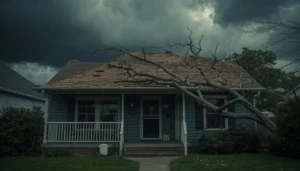
Xactimate estimates matter most after big storms because it lets adjusters and contractors price thousands of claims fast without negotiating rates one by one. Storm season puts real pressure on this system whenever it hits.
Research by Climate Central reports that 2025 was the third-highest year on record for billion-dollar weather disasters in the U.S., with 23 separate events causing a combined $115 billion in damage. The same report states that since 1980, the U.S. has had 426 billion-dollar disasters totaling more than $3.1 trillion in damage. That kind of claim volume is exactly why a shared pricing system exists.
What Does an Xactimate Insurance Estimate Look Like in Practice?

The bottom of an Xactimate estimate follows a simple calculation.
Line item subtotal + O&P + tax = RCV
RCV − Depreciation = ACV
ACV − Deductible = Final Payment
In practice, the number on your first check rarely matches the total estimate. Depreciation and your deductible have already been deducted. If you don’t see the recoverable depreciation listed separately, ask your adjuster to point to it. It should be its own line, not buried somewhere in the total.
What Restoration Practices Support Accurate Estimates?
Following IICRC-certified restoration practices helps restoration professionals inspect, document, and report property damage more accurately. This information supports a more complete insurance estimate.
Key Takeaways
- An Xactimate estimate is the process of pricing property repairs using Xactimate’s shared line-item codes and regional price list.
- About 75% to 80% of adjusters use it, and around 99% of carriers rely on it to set claim pricing.
- Line item codes identifies the trade, task, and material. RFG means roofing, DRW means drywall, and WTR means water damage work.
- RCV is the full replacement cost. ACV is RCV minus depreciation. Recoverable depreciation gets paid back once repairs are finished and documented.
- The U.S. had 23 billion-dollar weather disasters in 2025 alone, which is the exact kind of claim volume that makes standardized Xactimate restoration estimating necessary.
Conclusion
Xactimate estimating isn’t complicated once you know what the codes and numbers actually mean. It’s one shared pricing system that adjusters, contractors, and public adjusters all use to price the same kind of damage the same way. Once you understand RCV and ACV, spot a missing O&P line, and read the final calculations of your estimate clearly, it becomes much easier to review your estimate with confidence.