
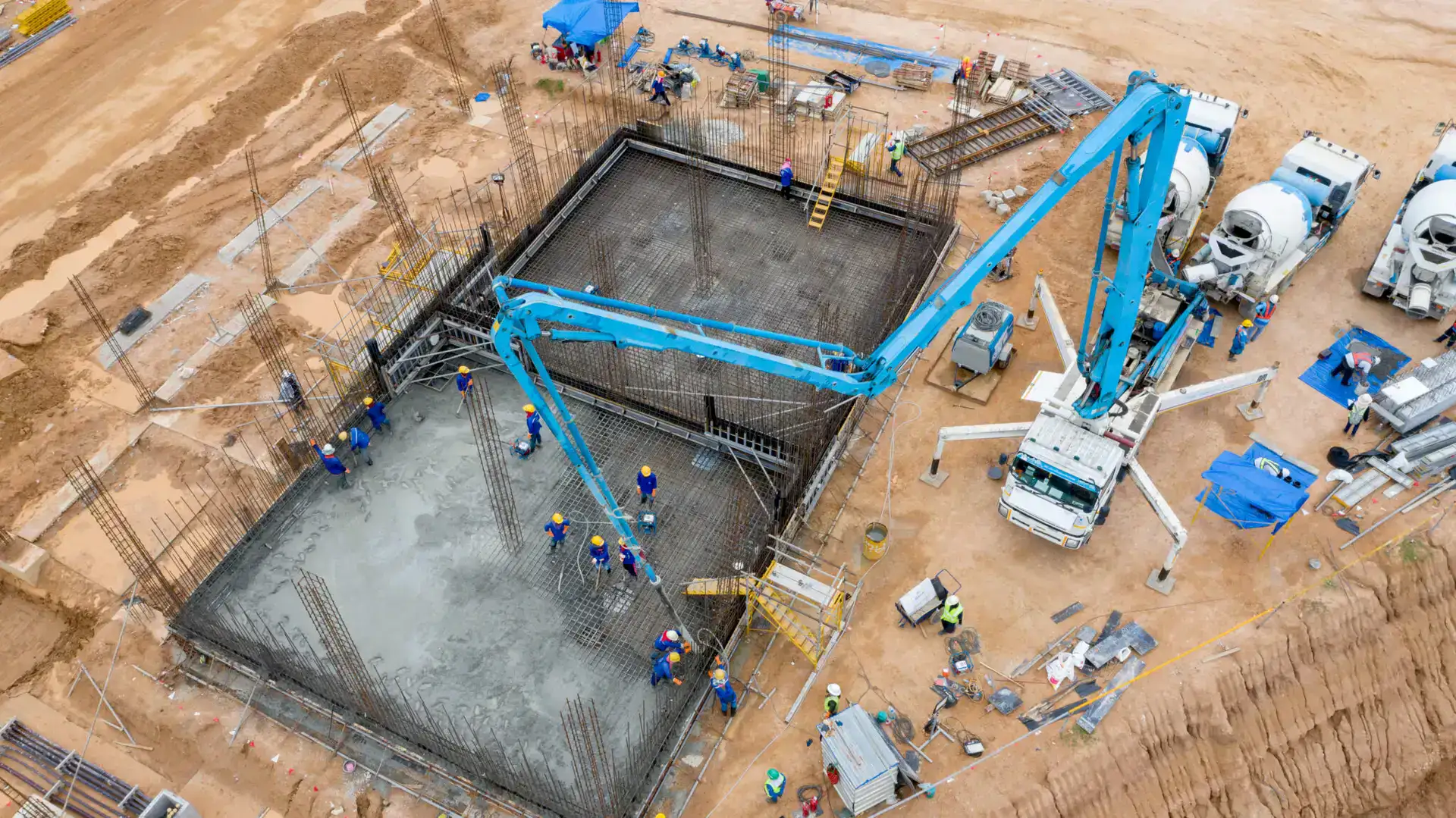
In this competitive construction industry, precise concrete takeoff has become necessary. However, it is the most important step in estimating any construction project. It tells you exactly how much material, yardage, and labor are required. Expert estimators analyze project plans and calculate quantities. They make sure that every element is evaluated from the concrete volume to the finishing. This way, the contractors can avoid mistakes and control the budget.
Busy contractors and builders rely on expert analysis. They outsource experienced companies for Concrete Quantity takeoff Services and complete the projects without overspending on materials and labor. In this modern construction industry, you have to be on point to remain competitive. Otherwise, a single mistake will lead you to project failure.
THIS GUIDE EXPLAINS HOW TO CALCULATE MATERIALS, YARDAGE, AND LABOR FOR CONCRETE TAKEOFFS!
Key Components of a Concrete Takeoff
A complete concrete takeoff includes:
Materials:
- Concrete volume
- Type and strength specifications
- Reinforcement materials
- Formwork and forming supplies
- Anchor bolts and dowels
- Vapor barriers
- Specialty additives
Labor needs:
- Preparation work hours
- Pouring and placement time
- Finishing and curing personnel
- Equipment operators
Equipment Needs:
- Concrete mixers
- Pumps and delivery trucks
- Finishing tools and compactors
- Safety equipment
Understanding Concrete Materials and Specifications
Concrete Mix Types and PSI Ratings
You must know that concrete strength is measured in PSI. This is called pounds per square inch. This means the amount of weight the finished concrete can hold.
However, different projects require different PSI ratings:
Common PSI Specifications are:
- 2,500-3,000 PSI includes Sidewalks, residential driveways, patios
- 3,500-4,000 PSI includes Residential foundations, garage floors
If you are an inexperienced individual, then it is a wise decision to rely on expert Concrete Estimating Services and complete your projects under budget and timelines.
Reinforcement items
Concrete requires this to control cracking.
Steel Rebar:
- Standard reinforcement for most concrete applications
- Costs approximately $1-3 per square foot installed
- Requires proper spacing
- Available in various sizes
Wire Mesh:
- Used for slabs on grade and light-duty applications
- Concrete Price Per Square Foot is about $0.20-0.30 per square foot
- Easier to install than rebar
- Commonly, 6×6-inch or 4×4-inch grid patterns
Fiber Reinforcement:
- Plastic or steel fibers mixed into concrete
- Reduces cracking and improves surface durability
- Costs vary by fiber type and concentration
Calculating Concrete Yardage
Concrete is ordered in cubic yards. For that, the formula is:
Cubic Yards
= (Length × Width × Depth) ÷ 27
The inches are converted into feet. The thickness is measured in inches. After that, it is divided by 12.
Consider Waste
It is recommended to never order the exact amount. It should be according to these guidelines: 5% for simple rectangular pours, 7-8% for standard residential work, and 10-15% for complex shapes.
The formula to calculate Concrete Cost Per Yard is:
Order Amount
= Calculated Volume × 1.05
For Sloped Slabs
Use average thickness
=(Minimum thickness + Maximum thickness) ÷ 2
For Steps and Stairs
Calculate volume for each step separately. At the end, sum all the volumes.
Labor Estimation for Concrete Projects
The labor expense covers 40-50% of total concrete project costs. However, the rates depend on the local market conditions. Labor costs range from $50-120 per hour, depending on:
- Geographic location
- Union vs. non-union labor
- Project complexity
- Equipment operation requirements
The formula to calculate labor hours is:
Total Labor Hours
= (Square Footage ÷ Production Rate) × number of workers
Detailed Concrete Takeoff Process
1. Review Project Documents
Before starting calculations, study all the plans. You must be aware of all the features and note special requirements. Commonly, missing PSI ratings or unclear reinforcement details are the issues.
2. Determine Project Scope
The next thing is to identify all the concrete work required. It includes the following components:
- Footings and foundations
- Slabs on grade
- Structural slabs
- Walls and columns
- Sidewalks and driveways
- Specialty items (stairs, curbs, gutters)
3. Organize Your Takeoff
Use the right method to organize the Concrete Quantity Takeoff. List all the concrete components separately. You must also be aware of the right measurements on the basis of type and location.
4. Take Measurements
Various Construction Estimating Companies now use modern software. This helps them to quickly take measurements without any errors. Plus, the plans can easily be modified, and the estimators can generate detailed reports with modern software.
5. Calculate Concrete Volumes
For each concrete element, apply the appropriate volume formula. Also, add waste factors and organize everything by its types and other details.
6. Determine Reinforcement Quantities
The next thing is to calculate reinforcement quantities. Calculate linear feet of rebar on the basis of size.
7. Estimate Formwork
Now evaluate formwork in linear and square feet. Do not neglect the quantities of stakes and bracing.
8. Calculate Labor Requirements
Based on the total square footage and project complexity, calculate labor requirements. After that, add all the costs by making sure that there are no mistakes in the evaluations.
Conclusion
Concrete Takeoff is one of the most important factors for the project’s success. However, accurate materials evaluations, yardage estimation, and realistic labor assessments are important for profitable projects. The contractors who rely on modern estimation methods always stand out in the industry.