
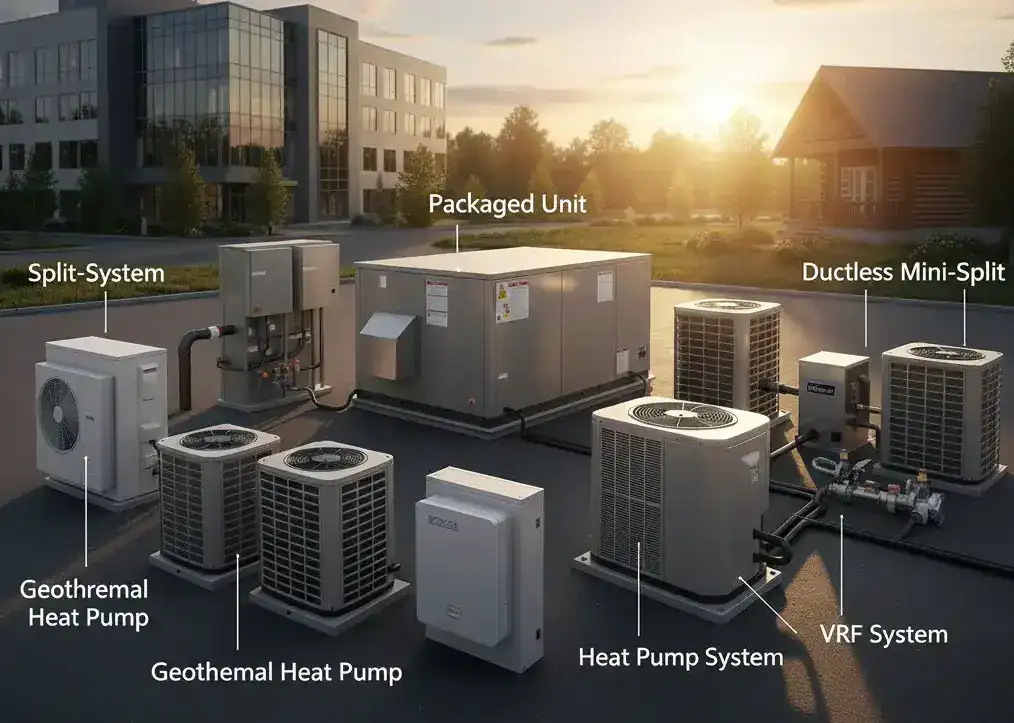
Different types of HVAC systems are important for everyone planning a residential or commercial project. HVAC systems are responsible for heating and cooling. They are also responsible for ventilating indoor spaces that affect the air quality and comfort of the space. To choose which HVAC system suits which type of space, you must have enough knowledge about it. We will explain the main types of HVAC systems and how they work in this article. HVAC systems can make your life easy and your building more comfortable.
What HVAC system do
HVACs are basically used to keep our indoor temperature comfortable and maintain fresh air. It controls three main functions.
- Heating
- Ventilation
- Air conditioning
Main types of HVAC systems
There are so many models of HVAC systems, but each has its advantages depending on the building type, budget, and energy goals.
1) Split HVAC systems
It is the basic type of HVAC system in homes. A split system is a system that includes an indoor unit and an outdoor unit that work together to heat or cool the home.
2) Packaged HVAC system
These types of systems are mostly used in commercial buildings where there is a limited indoor space because these types of systems combine heating, cooling, and air handling systems in one outdoor cabinet.
3) Central air conditioning system
In this system, central AC systems use ducts to deliver cool air to multiple rooms at once. These are effective for bigger areas such as large homes and commercial buildings.
4) Ductless mini split systems
These types of systems do not require any ducts and work well where the rooms cannot be connected to the main HVAC systems. They are energy efficient. These types of systems are used in apartments and older buildings.
5) Heat pump system
It reduces energy consumption and is good for areas with certain climates. The heat transfer mode is used, and no energy production is needed.
6) VRF systems
These systems are mostly used in commercial buildings. We can maintain different temperatures in rooms at once.
7) Hybrid HVAC systems
Hybrid systems work with a furnace. It uses them to switch between electricity and gas. Hybrid HVAC systems are used to reduce energy bills and provide comfort in different climates.
Right HVAC system selection
HVAC systems are selected depending upon the building size and other factors such as:
- Size of the building
- Number of rooms
- Local climate
- Energy efficiency goals
- Installation and maintenance cost
- Duct or ductless system preference.
Different buildings need different types of HVAC systems to work well.
How HVAC systems are used in residential buildings
Residential spaces are mostly comfortable spaces. Split systems and ductless units are commonly used in houses and apartments. People prefer these because they are:
- Easy to install
- Budget-friendly
- Quiet
- Efficient for small to medium spaces.
Many contractors use a duct takeoff service to estimate the actual size of the duct according to space.
How HVAC systems work in commercial buildings
Commercial spaces usually need stronger and advanced HVAC systems. Commercial spaces include shopping centers and schools, hotels, and warehouses. These spaces need systems that can run for long hours.
VRF/VRR and packaged units are used in commercial settings. They offer:
- Better temperature control
- High cooling and heating capacity
- Longer lifespan
- Energy saving for large spaces.
Importance of proper planning in HVAC installation
Planning includes designing the right pathways and the correct capacity. It also includes choosing the right system for the building. Sometimes professionals use HVAC estimating services to estimate, understand the cost and quality of equipment needed. This can help avoid unexpected expenses and result in a proper installation process.
Budget planning is also important while selecting an HVAC system for your space. Builders sometimes use construction estimating services to get a clear cost breakdown. These services help you plan expenses for material, labor, and equipment.
Maintaining the HVAC system for better planning
Regular care is needed for the HVAC system once it is installed. This includes
- Cleaning filters
- Checking ducts
- Inspecting electrical connections
- Servicing outdoor units
- Monitoring system performance.
Conclusion
Knowledge of different types of HVAC systems can help owners choose the option according to their space and budget. It is essential to know which type of system is used for which type of space. Proper planning and right take-offs can help in smoother installations and give long-term benefits.
HVAC systems are a basic need of buildings. From small buildings to large halls. All need clean air and a proper ventilation system. HVAC systems make it possible in an easy and simple way. One can install the system according to their need and budget.