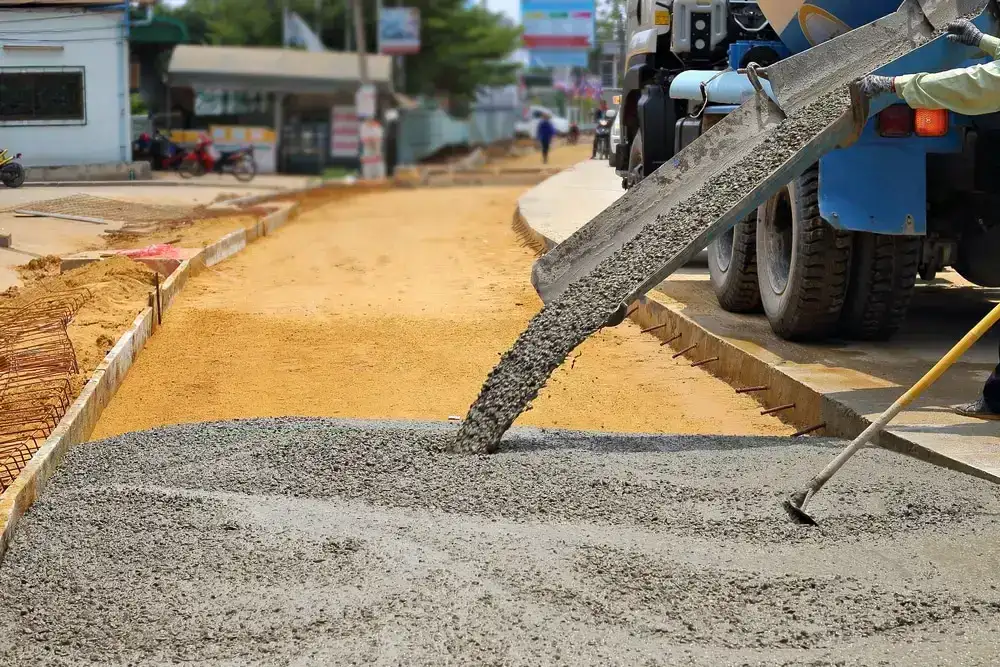
To estimate a concrete job, you have to excel in implementing the right steps. Whether you are a new contractor or just starting a new business. If you move on with guesses, you will end up overbudgeting. Using the right approach makes a big difference!
In this guide, you will get to know how to implement every step and safeguard your project budget and timelines.
Suppose you do not have experience in evaluating concrete jobs. It is better to win bids with the help of a professional Construction Estimating Company that provides error-free results!
DIG INTO THIS GUIDE TO LEARN HOW TO ESTIMATE CONCRETE JOBS TO COMPLETE THE PROJECTS UNDER BUDGET AND TIMELINES!
Basics of Concrete Estimation
The concrete estimation process includes the cost evaluation of materials, labor, equipment, and overhead costs. All these factors are evaluated according to the project requirement. But one condition is accuracy! You have to calculate concrete by considering the current market conditions and other factors.
Why Accuracy Matters?
A little error in the estimates leads you to overspend. That is why accuracy is appreciated to earn profits and complete the project error-free. Most importantly, in this competitive market, material price fluctuates and other factors impact the estimates.
However, to estimate a concrete job, follow the following steps:
Step 1: Measure and Calculate Concrete Volume
The first step in any concrete estimating cost is determining how much concrete you’ll need. For different concrete projects, use these formulas:
Slabs and Flatwork
Volume = Length × Width × Thickness ÷ 324
Footings
Volume = Length × Width × Depth
Convert them to feet and then divide by 27 for cubic yards
Walls
Volume = Length × Height × Thickness convert to cubic yards
Columns
Volume = π × Radius² × Height (convert to cubic yards)
Step 2: Calculate Material Costs
Material costs cover 40-50% of your total concrete job budget.
- Standard ready-mix concrete cost ranges from $125-$150 per cubic yard
- High-strength concrete ranges from $150-$175
- Delivery fees will be $10-$15 per mile
Step 3: Labor Cost
The hourly rates are different due to location and skill level.
- General laborers cost range between $18-$28 per hour
- Skilled concrete finishers are paid between $25-$45 per hour
You have to evaluate the labor hours:
1. Formwork
- Simple slabs take 0.5-1 hour per 100 square feet
- Complex formwork takes 2-4 hours per 100 square feet
2. Placement and Finishing
- Simple slabs take 1-1.5 hours
- Stairs work takes 2-4 hours
3. Site Preparation
- Excavation takes 1-2 hours
- Base preparation takes 0.5-1 hour
Step 4: Equipment Costs
Your own Equipment
Calculate the operational cost:
- Concrete mixer costs range between $50-$75 per day
- Power trowel costs range between $75-$125 per day
- Vibrators cost between $25-$40 per day
Rental Equipment
- Skid steer loader costs range between $200-$350 per day
- Concrete pump costs range between $500-$1,200 per day
- Excavator costs range between $250-$500 per day
- Plate compactor costs range between $50-$100 per day
Step 5: Account for Overhead and Profit
Overhead Expense
- Permits and inspections expense range from $200-$2,000
- Insurance for the specific job takes 2-5% of total costs
- Dumpster and waste removal cost $300-$800
- Temporary utilities cost $100-$500
Step 6: Consider Specific Factors
Adjust your estimate based on:
- Difficult access may require concrete pumping (+$500-$1,200)
- Tight urban locations may need traffic control (+$200-$1,000)
- Multiple stories may require a crane or a boom pump
Step 7: Use Estimation Software
Modern concrete contractors rely on estimation software for accurate estimates. Popular software is ProEst, PlanSwift, STACK, ConEst, etc. However, if you are unaware of how to use them, then get expert concrete estimating services from a reliable company.
Best Practices for Concrete Estimation in 2025
Never estimate from plans alone. It is a must to visit your sites. You have to assess challenges and check the condition of the soil.
Also, build a cost database in which you can track actual costs. Dig into the common change orders, material prices, and other factors. It means previous data is quite beneficial in predicting the accurate cost.
One more reliable thing is to get multiple quotes from different suppliers. For that, build your connections with contractors. It will help you close the best deals. Also mention what things are included and excluded:
- Excavation depth and disposal
- Base material and compaction
- Concrete mix specifications
- Finish type (broom, smooth, stamped)
- Sealing and curing methods
- Cleanup and waste removal
Plan Contingencies
For complex projects, it is important to plan contingency to protect your profit margins.
Conclusion
So, you have to be proficient to estimate a concrete job by combining technical and important skills. If you follow the right approach to evaluate the construction cost. You can deliver accurate cost projections to your clients. These types of cost evaluations can help you secure more profits. Plus, you can protect your profit margins. The more you gain experience, the more you can enhance your results.