Written by Cari Melone: Construction Content Writer Published: July 2026 · Reviewed for technical accuracy against AISI cold-forming standards and Metal Construction Association guidelines
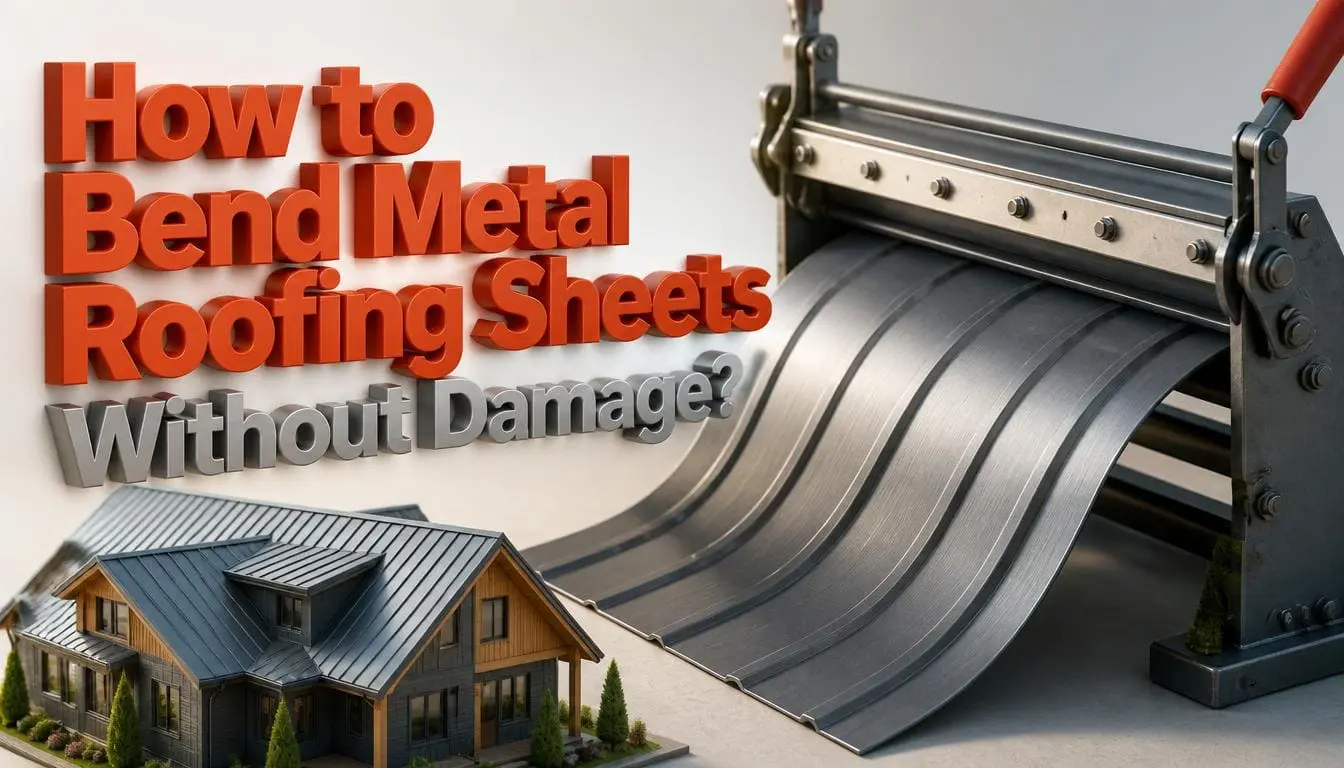
To bend metal roofing sheets without damage, first make the fold line. Then clamp the panel down firmly and notch in the seam if needed. Then make the bend slowly with a hand seamer or a brake. Never hit the sheet with a hammer. Keep the inside bend radius as wide as the sheet is thick. And finish the crease with a rubber mallet, not a steel one. Almost every cracked panel or dented seam happens the same way. Someone rushes the bend, or grabs the wrong tool, or bends cold metal in a hurry. Knowing how to bend metal roofing sheets correctly helps prevent cracks, dents, and damaged seams. Take your time and use the correct equipment to fold it neatly the first time.
Worried about cracking or denting the sheet? Follow the right bending steps and use proper tools to get a clean, damage-free fold.
What Actually Causes Damage When You Bend Metal Roofing?
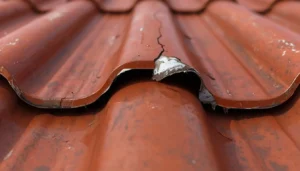
Damage occurs when the metal is stretched beyond its ability to stretch. When the bend is too deep, too rapid, or too cold, the outer skin of the metal is stressed beyond its limits. This can crack, dent, or dislodge the metal’s coating.
Three things cause almost all of it:
- A radius that’s too tight: The tighter the fold, the more the outside stretches.
- A hammer rather than a seamer: Dents from steel-on-steel damage the panel and crack the paint.
- Cold metal: Steel stiffens below about 40°F, so a bend that’s fine in summer can split in January.
A properly bent roof should hold up for decades without issue. The Metal Construction Association study revealed that an unpainted 55% aluminium-zinc coated steel standing seam roof, assembled correctly, can serve a life of over 60 years. One of the few things that shortens that life is a cracked bend which provides access to the bare steel that needs moisture.
How Much Material Do You Need for Metal Roofing?
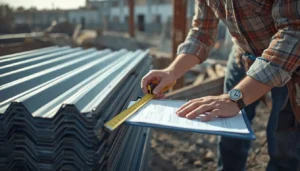
Before bending the sheets, it is also important to know how much material the project will need. Calculate the roof area first, then add 10 to 15% extra for waste or cutting mistakes. This gives you a better idea of how many roofing sheets and other materials you need for the project.
If the quantities are wrong, you may end up with material shortages, waste or extra costs. To avoid these problems, many contractors outsource roofing estimating services to get accurate material quantities and cost estimates.
How to Bend Metal Roofing Sheets Without Damaging Them?
To bend metal roofing without damaging it, follow the steps given below. Remember that the speed you work at matters more than the strength you use. A fast, forced fold is almost always the one that cracks.
-
Mark the Fold Line
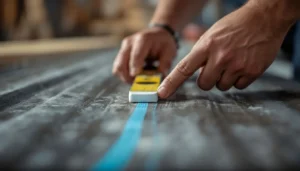
Run a chalk line straight across the whole panel first. This line is what your bend will follow, so an uneven line here makes the final fold also uneven. Use one long straightedge instead of guessing in short sections. Small gaps add up fast over a full sheet.
-
Clamp the Sheet Down
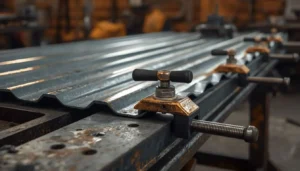
Lock the panel to your bench or brake at both ends. It should not move at all. Even a small shift while folding leaves an uneven crease, and you can’t fix that later. Use extra clamps along longer panels, not just the two ends.
-
Notch the Seam
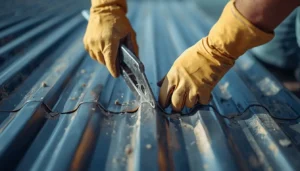
Cut about an inch of relief at the fold point before you bend. This matters most on standing seam panels. If the notch is absent, the metal will end up buckled up rather than flat. This takes a few seconds but saves you from redoing the entire panel.
-
Pull the Fold in One Motion
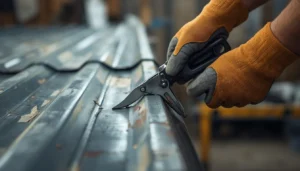
Once the sheet is clamped and notched, pull the seamer or brake through in one steady motion. Don’t stop halfway. Starting and stopping causes uneven creases because the metal starts to set at a different angle. Keep it slow and even. Speed is what cracks the metal, not effort.
-
Set the Crease With a Rubber Mallet
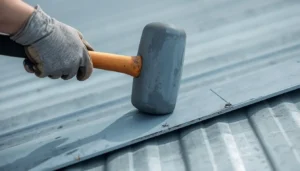
Begin in the center of the fold and move towards the edges. Gently push to smooth out the crease fully. A rubber mallet can do this without denting the panel or chipping the paint as a hammer can. Light, even taps are enough. You’re setting the fold, not forcing it.
-
Check the Angle Before Moving On
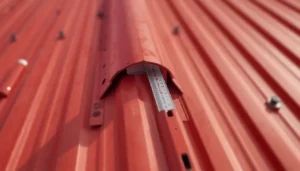
Hold a speed square against the finished fold to check if it’s straight. This takes a minute now. Catching a bad angle after ten panels are already up means redoing a whole section of roof. Checking it early is what stops small mistakes from becoming a pattern.
How Tight Can You Bend Metal Roofing Before It Cracks?
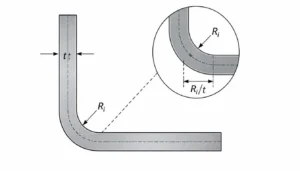
Metal roofing can be bent up to a certain degree without cracking. The inside radius of the bend should be equal to or greater than sheet thickness, if possible. If you make it even tighter, then you are overstretching the outside surface of the metal.
This isn’t a guess. Guidance based on AISI cold-forming standards puts the safe minimum radius for mild steel at roughly one to two times its thickness and warns that anything tighter raises the chance of cracking, according to Arcus CNC. Roofing steel is thin so it handles tighter bends than thicker materials. But pushing the metal too far causes the panel to split.
Protocase’s fabrication charts back this up: once the radius drops below the material’s own thickness, cracking becomes much more likely and hard to predict. A hand seamer with an undersized die and cold weather both push you past that line without you noticing.
What Tools Keep You From Damaging the Panel?
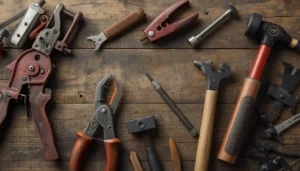
You need five tools that keep you from damaging the panel. It includes a hand seamer or bending brake, locking clamps, tin snips, a rubber mallet and a notching tool.
- Hand seamer or bending brake: Folds at a steady angle, so you never have to force it.
- Locking clamps: Hold the sheet in place. A panel that shifts folds crooked.
- Tin snips: Help you make clean cuts.
- Rubber mallet: Taps the crease flat without denting or crushing the coating.
- Notching tool: Creates a small relief to prevent buckling of the seam at the point where it is folded.
What Mistakes Are Damaging Your Roofing Sheets?
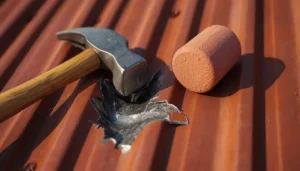
The most common mistake is grabbing a hammer, not a seamer. A few others do just as much damage:
| Mistake | Why it damages the sheet | What to do instead |
| Hammering the fold | Dents and may break the coating on the metal | Tap lightly with a rubber mallet |
| Skipping the notch cut | Buckles the seam where folds overlap | Notch about 1 inch before folding |
| Bending in cold weather | Brittle metal cracks instead of flexing | Warm the panel or bend indoors |
| Forcing a tight radius | Splits the outer surface of the bend | Keep the radius at least as wide as the sheet is thick |
| Not clamping the sheet | The panel slips and folds unevenly | Clamp both ends before you start |
If it is your first time, try on a scrap piece first. It has no cost and it gives you a clear indication of where things go wrong.
Conclusion
Understanding how to bend metal roofing sheets without damage is not a difficult task when you use proper tools and take your time. Maintain a radius equal to the thickness of metal and fold slowly rather than forcing the metal. Place the sheet on the clamp, cut the seam and let the seamer do the work. Doing that, you would be getting a roof of 60 years durability instead of 5 years which would leak at the fold.