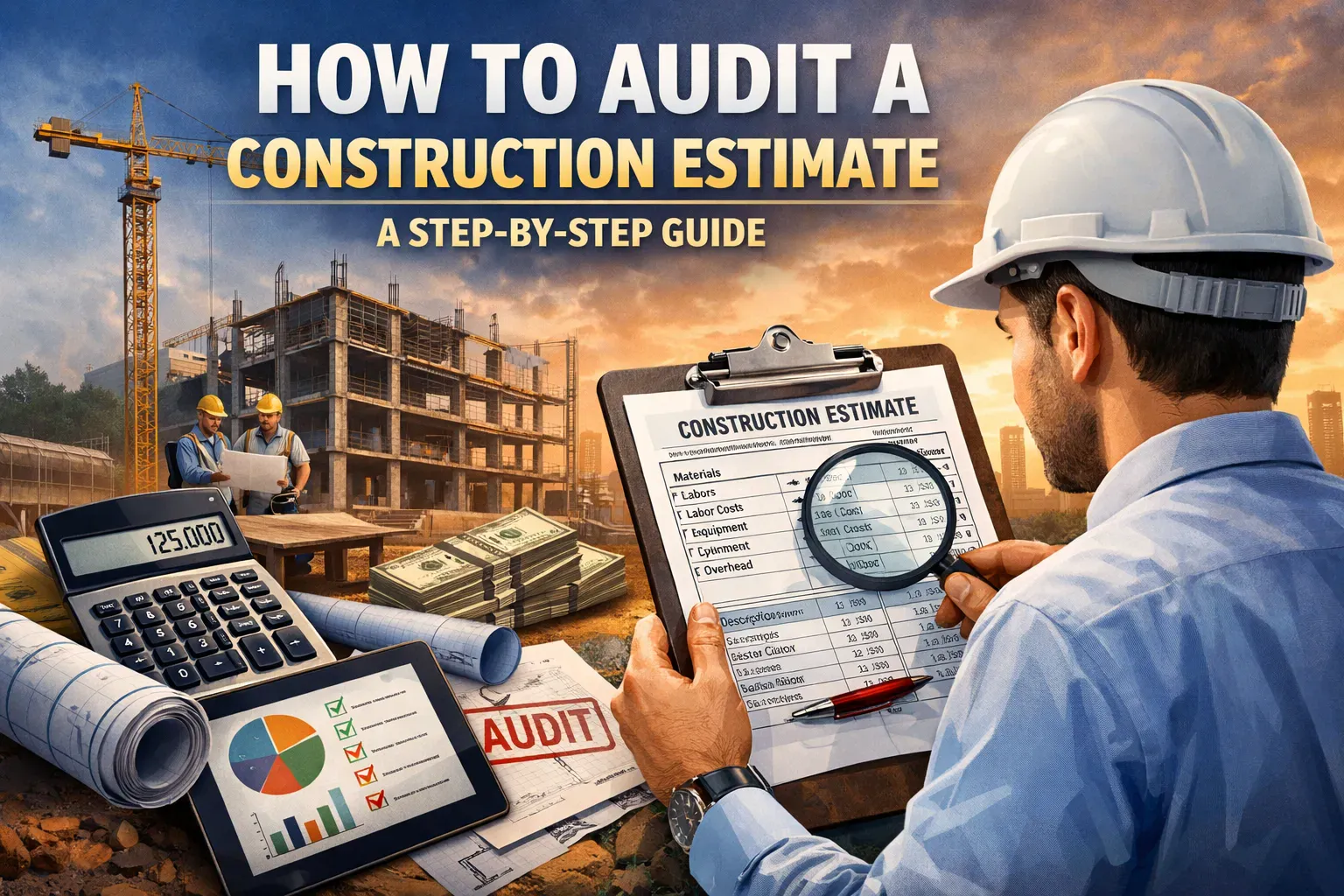
The right construction audit always results in providing good profit margins. A construction estimate is the financial blueprint of an entire project. You need to understand how to audit an estimate with the right measures. An audit reveals errors, inflated costs, and unrealistic assumptions before a single thing hits the ground.
Usually, building owners and busy contractors compromise this step. They make wrong assumptions, which result in over-budgeting and delays. To avoid this situation, it is highly recommended that you consult a construction estimating company that provides precise audits. This directly helps in completing the projects under budget!
Steps to Audit a Construction Estimate
Step 1: Gather All Relevant Documents
You need to collect information about the project first. If you perform an audit with any missed details, then it will result in various consequences. One must have the following information:
- The estimate itself, including all line items, breakdowns, and supporting calculations
- Architectural and engineering drawings
- Project specifications and scope of work
- Any addenda, revisions, or clarification letters issued after the initial design
- Contracts, subcontractor quotes, and vendor proposals
- Geotechnical reports, environmental studies, and site surveys
- Applicable building codes, zoning requirements, and permit fee schedules
Step 2: Understand the Scope of Work
The most common mistake in the estimate is the wrong judgment between the written scope of work and what is actually priced. So before working on the line items, invest a good amount of time in understanding what the project entails.
For that, carefully review drawings and specifications. Review all the complex systems related to mechanical, electrical, or temporary facilities requirements. If you do not have any experience, then get expert Sitework Estimation from any reliable company.
However, you must have the following answers if you are auditing a construction estimate:
- Does the estimate reflect the current set of drawings?
- Are there any design elements that appear to have been underpriced?
- Does the scope include off-site work?
Step 3: Check the Estimate Format and Structure
A detailed construction audit should follow a recognized format such as MasterFormat. It must be written in an organized way. Review the structure for the following:
- The presence of site work, concrete, masonry, and other conditions
- The estimate is organized in a sequence that aligns with the construction schedule
- The estimate must categorize hard costs, soft costs, etc.
Step 4: Verify Quantities
Quantity takeoffs are the major part of any estimate. If unit prices are not correct, incorrect quantities will produce erroneous results. For that, you can conduct an independent quantity verification on key components, including:
- Concrete volumes
- Structural steel tonnage
- Roofing and waterproofing square footage
- Mechanical and electrical equipment counts
- Earthwork volumes
Step 5: Validate Unit Prices and Labor Rates
When you are done verifying the quantities, you need to shift towards the unit pricing. Compare the estimator’s rates with the current market data. Useful references include:
- RSMeans Cost Data
- ENR (Engineering News-Record) construction cost indices
- Local subcontractor and supplier quotes
- Historical cost data
Step 6: Review General Conditions and Overhead
General conditions are mostly miscalculated. They are sometimes underestimated. However, it covers the cost of running the job. This includes project management, site safety, etc.
Make sure to review the general conditions of the construction project audit:
- Are the project timelines accurate?
- The cost of mobilization must be properly considered
- Look into the estimates for including the costs for required inspections, testing, and commissioning?
General conditions covers 8% to 15% of the total construction cost. It depends on the complexity of the project.
Step 7: Assess Contingency
To audit a construction estimate, it must also include contingency. It is an extra budget that is set to cover unexpected cost surprises in the project. The appropriate level depends on project phase, complexity, and risk profile:
| Phase | Contingency Estimate |
| Design Development | 15–20% |
| Construction Documents | 5–10% |
| Signed Contracts | 3–5% |
Step 8: Check for Exclusions and Clarifications
Most construction estimates include a list of exclusions. These are the items that are included in the price. Read every exclusion carefully. Common exclusions are:
- Permit and impact fees
- Utility connection and service extension costs
- Furniture, fixtures, and equipment (FF&E)
- Owner-supplied materials or equipment
- Testing, commissioning, and startup services
- Phasing costs or premium time associated with occupied building work
Step 9: Document Findings
The final step is to write your findings in a clear report. The report should include:
- A summary including different cost opinions
- A list of missing line items or items requiring clarification
- Specific line items where quantities appear incorrect. The recommended corrections must also be mentioned
- An assessment of contingency
- A review of exclusions and their cost implications
- Recommendations for value engineering opportunities
Conclusion
To audit a construction estimate, you must be good with technical information. If you are good at that, then you can protect the project owners from over-budgeting. Plus, it gives confidence to the lenders to analyse the project and make a plan. The contractors also obtain a complete picture of project risk. The most important thing is to question every assumption. Check everything solely and look into the background of every number. The answers to such questions decide the project’s wins or losses.