Understanding a quote versus an estimate is important for anyone planning a construction project. Many homeowners incline confuse these terms, but there is a huge difference between the two. Knowing the difference can make you, can help you make a better financial decision and choose the right contractor for your needs. In construction projects, time and materials change according to the changes in the project. It is always better to know, so it is useful to know the difference between an estimate and a quote and know when to choose, when to request each.
What is an estimate?
To understand what an estimate is, think of a rough guess of the project cost. The estimate is not exact. It is made to give the client an idea of the project cost before planning starts.
An estimate helps when:
- The design is not final.
- Material choices are still undecided.
- The project is in early discussion.
- You want to compare the rough cost.
Estimates can change as more information is at hand.
Types of estimate
Estimates depend on the information available at hand.
Rough estimate:
A rough estimate gives a general cost range. It is usually offered at the start of the conversation.
Preliminary estimate:
This estimate is drawn on the basis of drawings and measurements.
Detailed estimates:
It is a detailed estimate on the basis of an accurate drawing and a material list. This estimate helps create a complete budget.
What is a quote?
To understand what a quote is, think of it as the fixed price the contractor agrees to follow. The quote is much more accurate than the estimate. It is based on specific details, exact measurements, chosen material, and the scope of the work. When the quote is approved, the contractor is expected to complete the work within that price. This makes a quote legally stronger than an estimate. A quote is helpful when:
- You already know what you want done.
- Materials and finishes are selected.
- The contractor has visited the site.
- The project details are clear.
A construction quote secures both the client and contractor by setting a clear price.
Key differences between estimates and quotes
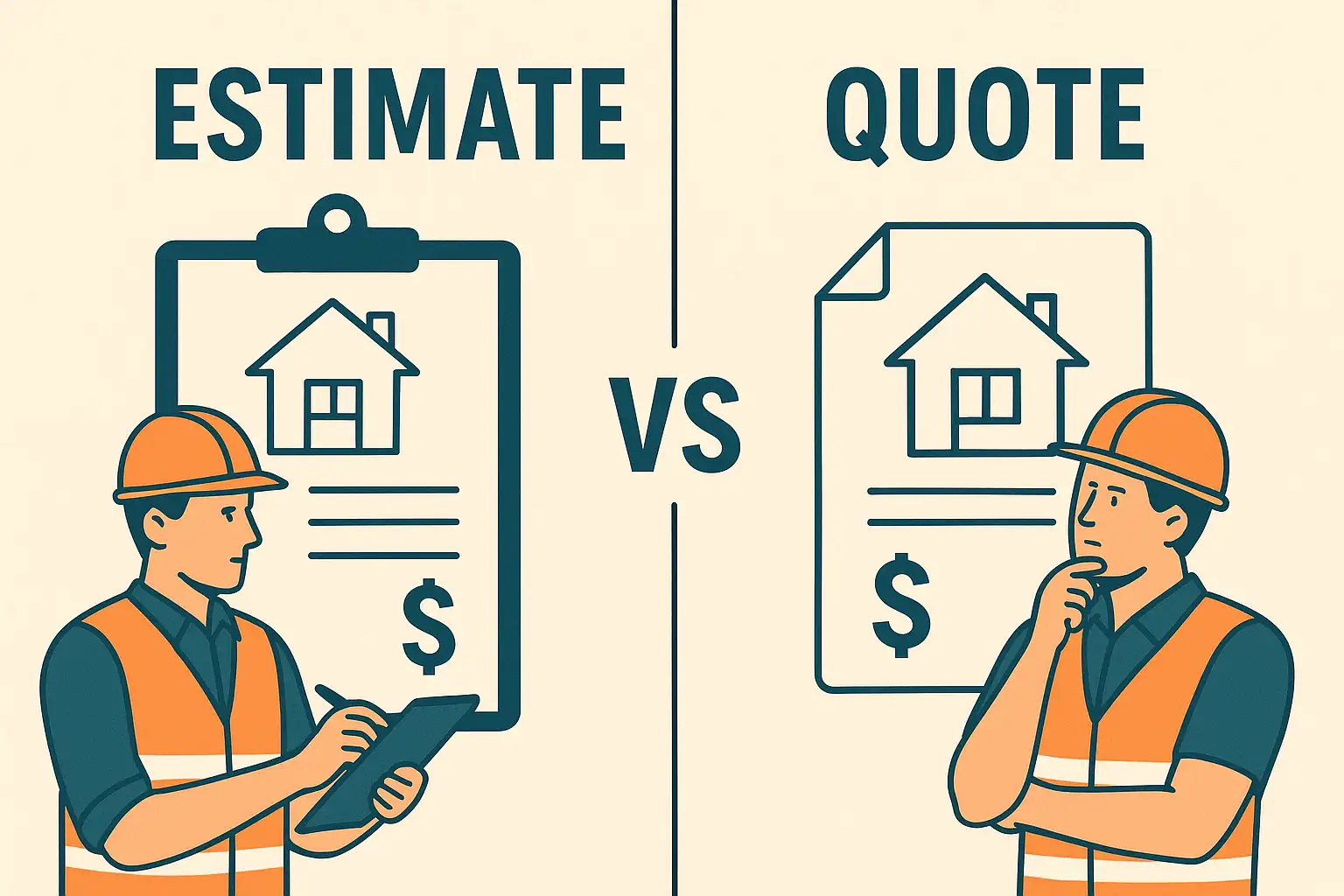
Understanding the quote vs the Estimate becomes easier when you look at the main difference side by side.
Accuracy Level
Estimate: Approximate Cost.
Quote: Final, Fixed Price.
Purpose
Estimate: Early Planning.
Quote: Final Decision before work begins.
Flexibility:
Estimate: Can Change.
Quote: Stay the same unless the project changes.
Detailed Level:
Estimate: General information.
Quote: Exact material, labor, and timeline.
Commitment:
Estimate: Not Legally Binding.
Quote: Often Legally Binding.
Estimate requirement
Estimates are requested when you are still exploring options. Estimates are perfect when
- You want to compare different contractors.
- You are deciding between multiple material choices.
- You need a rough idea of the budget.
- You are in the planning or design phase.
Estimates give you an understanding of the project and whether the project is realistic according to the budget or not. Some contractors also use construction take-off services to help create more accurate early estimates.
Quote requirement
A quote is needed when you are ready to start the project and need an exact price. Quotes are useful when
- You know your needs.
- You have the final drawing or measurements.
- The contractor has visited the site.
- You want a formal written cost.
Quotes offer price confidence and help prevent arguments about cost later on.
Why accuracy matters in construction pricing
Accuracy of the pricing depends on the details of the project. Cost can change with a small change in measurements or material. That’s why keeping everything clear and documented is important.
Contractors use Residential Estimating Services when working on current projects. This can help when working on a project like remodeling and roofing.
Companies may rely on Commercial Estimating Services for large projects. Commercial projects use Deep Analysis. Here, accuracy is very important.
How clients can prepare for estimates and quotes
Clients should follow the following steps for the best results.
- Have basic ideas or photos of what you want.
- Be honest about your budget.
- Prepare measurement, if possible.
- ask questions about the material and methods.
- Provide a way into the site.
Common mistakes to avoid
The client must know the difference between the quote and the estimate. The following mistakes should be avoided.
- Thinking that an estimate is a fixed price.
- Not comparing quotes from multiple contractors.
- ignoring the details in the quote.
- making changes after accepting a quote without discussing the new costs.
- not asking questions before work begins.
Conclusion
Understanding the quote vs estimate helps you communicate better with the contractor. It helps you plan a budget in a better way. An estimate gives the basic idea of the cost, and a quote gives a fixed price based on detailed project information. You can make your project successful by getting support through take-off and estimating services, and by knowing when to use each one.