
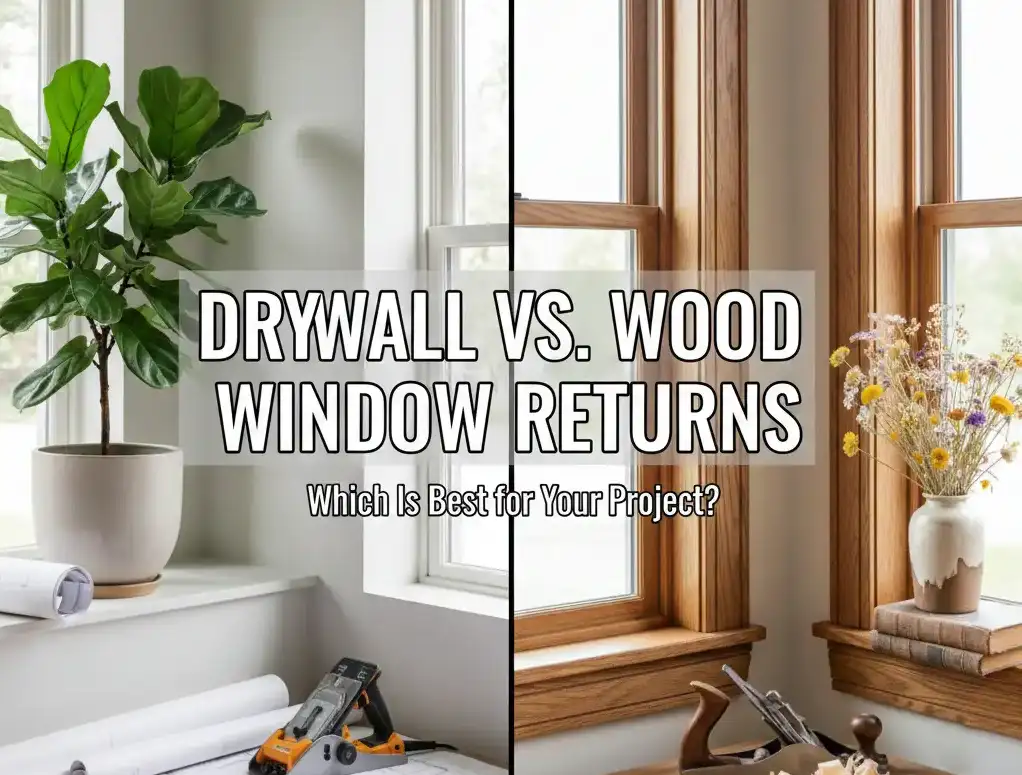
It is one of the most important yet stressful decisions to make to choose between a wood window return and drywall. The choice directly affects the aesthetic appeal of your space, but also your budget. With the growth in demand, modern construction methods are also being enhanced. Understanding all the options becomes important for all homeowners and builders.
If you are worried about the cost required to install them, then get an expert construction cost estimation from an authentic source. It will help you select the best materials within budget. However, first you need to compare the pros and cons of both of them.
COMPARE DIFFERENT FACTORS BETWEEN DRYWALL VS. WOOD WINDOW RETURNS AND SEE WHICH IS BEST FOR YOUR PROJECT!
Understanding Window Returns
Window returns are the area where the interior wall touches the window frame. It is most likely the jamb area of the window opening. However, this space has been finished with wood jamb extensions and decorative trim casing.
Plus, they are common all over the country, mostly outside the Northeast.
Drywall returns use the gypsum board material. It creates a smooth surface around the window. Whereas the wood returns include the installation of wood jamb extensions.
The Case for Drywall Window Returns
Cost-Effectiveness
One of the major reasons that homeowners choose drywall is its affordability. A project with 24 windows cost almost $ 1,750 in materials and labor combined. Trim is not used in it, which directly lowers the material expense. Plus, it is simple to install everywhere. Drywall Estimator helps you choose the right materials to save overall money.
Modern Aesthetic Appeal
In modern architecture, clunky trim is almost avoided. Drywall returns deliver a clean look that’s perfectly suited to modern home design. The simple combination of wall and window creates visual simplicity. It shows a very clear look.
The benefits of drywall return installation include:
- Drywall easily adjusts to fit around windows of various sizes without custom cutting complex trim pieces
- Using modern products like extra-wide L-beads with vinyl materials makes installation faster and more straightforward
- While proper technique is still required, drywall finishing is generally less specialized than precision trim carpentry
Energy Efficiency Considerations
Many people mostly ignore one advantage of drywall returns. It includes the reduced thermal bridging around window openings. It helps to reduce the air leakage. As a result, a thermal barrier is created when properly sealed. This improves the overall energy efficiency.
The Drawbacks of Drywall Returns
Durability Concerns
- Drywalls are not wear and tear-resistant
- Plus, they need to be maintained after some time again and again.
- The corners of the drywall return cracks
Limited Design Flexibility
You need to know that smooth drywall is not flexible. If you want to install old style then drywall returns may feel out of place. Wood trim offers multiple design choices.
Window Treatment Challenges
Homeowners can face problems when installing window coverings. This mostly happens with the inside blinds or shades. Drywall edges are not as strong as wood.
The Advantages of Wood Window Returns
Classic Beauty and Character
Wood trim is a traditional building material. It gives a classic look. Plus, it is also used to provide warmth in the design. For homes with traditional styles, wood window trim looks most suitable. To manage things under your budget, get expert Wood Estimation from a good source.
Superior Durability
The life of the wood window returns more than the drywall. If they get damaged, they can be easily replaced with the wood pieces. However, this makes the maintenance process simpler.
Design Versatility
- From simple flat stock to complex built-up moldings
- Paint-grade MDF, stain-grade hardwoods, or composite materials
- Adjust proportions to complement window size and room scale
- Match existing trim throughout your home
Making the Right Choice for Your Project
Choose drywall returns when:
- Consider Budget constraints
- Your design aesthetic favors modern interiors
- You’re working with thick walls where wood trim would appear excessive
- The home has contemporary architecture throughout
- You want to maximize natural light transmission without visual interruption
Choose wood returns when:
- Your home features traditional or transitional architecture
- Durability in high-traffic areas
- You plan to install inside-mount window treatments
- Design flexibility and customization are priorities
- You’re matching existing trim throughout the home
- The architectural period or style demands decorative trim
Installation Best Practices
No matter which option you choose, proper installation is the main thing. Even high-quality windows let the air in if they are not installed properly.
However, the installation should always follow the instructions and be done by skilled professionals.
For drywall returns:
- Use the right corner beads
- Fitting the drywall tightly to the window frame
- Applying several smooth coats of joint compound
For wood returns:
- Take accurate measurements
- Using proper shims
- Making tight corner joints
- Finishing the wood carefully
Conclusion
The choice between drywall vs wood window returns depends on your specific project requirements and budget. Make sure to properly install whatever you choose to save future cost. By carefully considering these factors, you can make an informed decision.