Thermal insulation in buildings maintains the inside temperature for occupants to live a peaceful life. If your building is providing heat in a cold climate, or cold in a hot climate, and lowering your electric bills. This means that your thermal insulation is perfect. It is a reliable thing that helps you adjust to climate change. If it is not working properly, then a lot of electricity is wasted. Due to this reason, people do not get a balanced indoor environment.
Well, by considering its importance, it remains misunderstood. Building owners don’t know which materials to choose. They don’t know where to install. So, you need to understand all thermal insulation types and select the right one for your needs.
KNOW ABOUT DIFFERENT CHARACTERISTICS OF THERMAL INSULATION AND CHOOSE THE ONE THAT IS SUITABLE FOR YOUR PROJECT!
What is Thermal Insulation?
Building thermal insulation is a detailed process to reduce the transfer of heat between the in and out of the building. For that, materials are used like fibreglass or foam. Make sure to work properly on insulation to enhance energy efficiency. It provides great benefits:
- Dramatically reduces the need for heating and cooling
- Can reduce energy consumption by up to 50%
- Reduces greenhouse gas emissions by reducing energy consumption
- Maintains a stable indoor temperature all year round
- Provides thermal benefits as well as acoustic insulation
- Many materials provide fire-resistant properties
Various Thermal Insulation Materials
1. Glass Wool
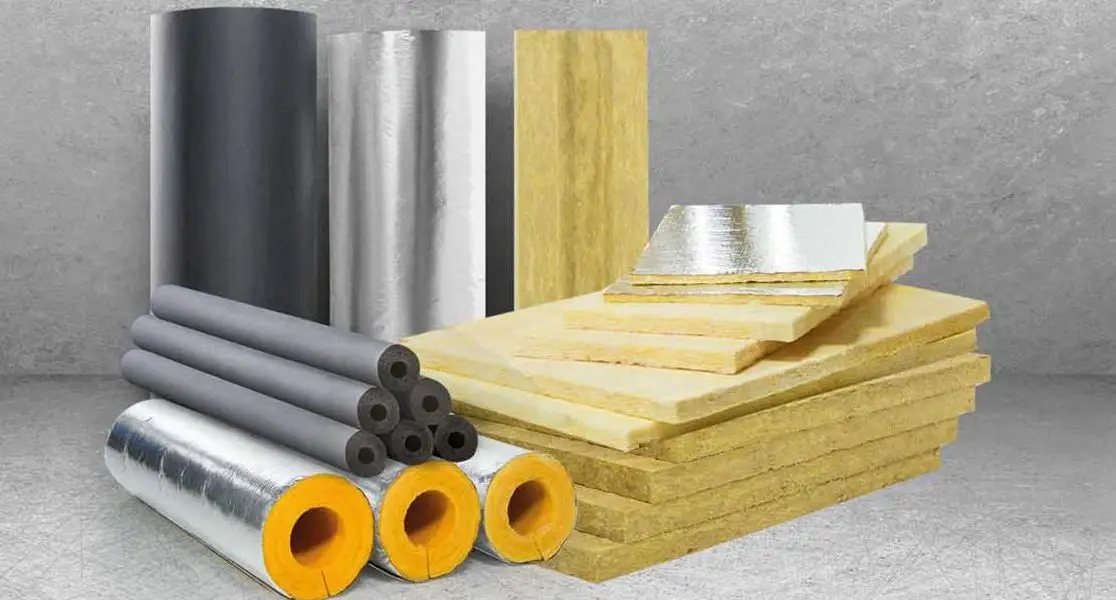
Glass wool is manufactured by heating silica sand at 1200ºC to 1250ºC. They convert into fibers and then convert into pipes, boards, and blankets of different sizes.
Characteristics:
- R-value is 2.2 to 2.7 per inch up to R-15 for high-density batts
- Fire-resistant
- Affordable
- Effective for both thermal and acoustic insulation
2. Mineral Wool
They are made from steel slag and mineral wool. They help to enhance the performance.
Characteristics:
- R-value is R-2.8 to R-3.5
- Heavier than fiberglass
- Superior fire and moisture resistance
- More durable but typically more expensive
- Requires professional installation
3. Expanded Polystyrene
The expanded polystyrene is better because it has a long life and it provides excellent thermal insulating capabilities.
Characteristics:
- Composed of fused small plastic beads
- Water-resistant and rot-proof
- Recyclable
- Lightweight yet effective
- Cost-effective
4. Extruded Polystyrene
It is produced by blending exclusive materials, after which they are run through a die.
Characteristics:
- Higher R-value than EPS
- Manufactured by pressing molten material into sheets
- Excellent moisture resistance
- Greater compressive strength
- Subject to thermal drift over time
5. Cellulose
Cellulose is made from recycled paper. It is affordable and effective.
Characteristics:
- It is made from 85% recycled newsprint
- 15% fire retardant
- R-value is R-3.1 to R-3.7
- Very durable and environmentally friendly
- It is naturally fire-resistant when treated with boric acid
- It contains minimal oxygen, which reduces the possibility of burns
Factors for Choosing Insulation
1. R-Value
The R-value helps to measure the insulation. Experts look for resistance to heat flow. If the R-value is higher, then it will provide good performance. Always consider your climate conditions before selecting the right value.
2. Climate
In cold weather, the material must have high thermal resistance. In this way, less heat is lost. The material can function well in harsh weather conditions.
3. Moisture Resistance
It is important for humid climates and basements.
4. Fire Resistance
Mineral wool and glass wool provide the best fire protection.
5. Installation Method
Consider hiring professional Insulation Estimating Services to manage your budget. This way, you can install the right thing, whether by an expert or by doing it yourself. But spray foam requires professional help.
6. Cost
It is common that some of the materials are high in cost. But they are like a long-term investment because they reduce their energy bills.
Common Challenges
Losing thermal capacity
A few foam insulation lose their insulating capability over time because the gas inside them leaks out. You can use protective coverings and set your calculations on the long-term stable R-value.
Moisture Issues
Moisture also affects the performance of insulation so install vapor barriers. Plus, choose those materials that are resistant to moisture.
Installation Gaps
Improper installation always directly compromises the performance. You can use spray foam for those areas where it is hard to reach.
Fire Safety
Some materials can catch fire. Use fireproof materials in your buildings. This will enhance the safety of your buildings.
Conclusion
Thermal insulation is one of the best investments. This maintains the building’s indoor environment. In this inflation, the goal of every building owner is to reduce energy bills. With the right thermal insulation, you can improve comfort. It is better to hire a reliable Construction Estimating Company because they provide accurate estimates according to project