

A scope of Work for a Construction Project includes even the tiniest detail of the project. It includes required materials, timelines, and who is responsible for each task. Moreover, one must also write what is included or excluded in standard language so that a third party can execute without asking follow-up questions. Use the right construction language because it is one of the major issues. According to the HKA, CRUX Insight Eighth Annual Report, scope change remains the leading cause of claims and disputes on construction projects worldwide.
What Is A Scope of Work For A Construction Project?

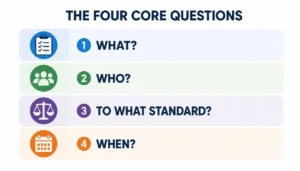
A scope of work is a professional document that shows:
- What work will be performed
- Who will do it
- To what standard
- When will it be done
This is a legal contract that incorporates the SOW and governs payment terms. Construction disputes are normal in almost every project type. For this reason, solutions are included in the contract.
The scope of work supports the main contract. It does not replace it, but there is a common mistake on smaller projects. People treat a short description as enough information instead of writing a detailed scope document. This is the situation where most problems start without clear information. Small changes are normal in construction projects. But scope creep can lead to disputes and delays, which later result in disagreements.
What Should Every Construction Scope of Work Include?
A complete scope of work answers five questions before work begins:
- What’s being built
- What materials and standards apply
- Who does what
- When it happens
- What’s explicitly excluded
If you even miss a single point, then issues are going to start instantly.
Core components of a construction scope of work:
| Section | What it defines |
| Project overview | Location, project type, and overall objective in plain language |
| Detailed deliverables | Specific tasks, quantities, and finished conditions for each phase |
| Materials and standards | Exact products, grades, or specifications required — referencing building codes where applicable |
| Exclusions | What is explicitly NOT included, to prevent assumed inclusions |
| Timeline |
|
| Roles | Which party supplies materials, permits, equipment, or labor for each task |
| Payment schedule reference | How the SOW ties to draw schedules or milestone payments |
| Change order process | How scope changes will be documented, priced, and approved |
Many contractors build this using a construction scope of work template as a starting structure, then customize the deliverables and exclusions section for each specific project .
How Does a Scope of Work Connect to Cost Estimating?
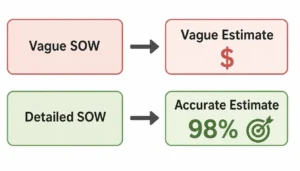
A scope of work and a cost estimate should be built together, not sequentially, because the estimate can only be as accurate as the scope it’s based on. If the SOW is vague about materials or quantities, the estimate underneath it is really an estimate of the vague version of the project — not the one that eventually gets built.
This is where a construction estimating checklist becomes useful alongside the SOW:
- Working through measured quantities
- Current material pricing
- Labor requirements
- Waste factor for each scope item
Which Type Of Estimate Needs A Full SOW?
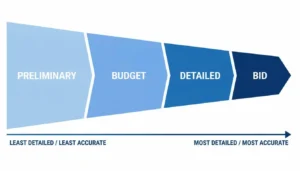
All the project stages do not need the same level of scope detail. Matching SOW specificity to the estimate type prevents wasted drafting effort early on.
Let us show you the common types of construction estimates, from least to most detailed:
- Preliminary (order-of-magnitude) estimate — a rough range based on project type and size, often before a full SOW exists.
- Budget estimate — a more refined range once basic scope and major systems are defined, typically within 15–20% accuracy.
- Detailed (definitive) estimate — built from a complete SOW, itemized quantities, and current material/labor pricing.
- Bid estimate — the contractor’s final priced proposal, submitted against a complete SOW and set of drawings/specifications.
How Do You Prevent Scope Creep Once the Project Starts?
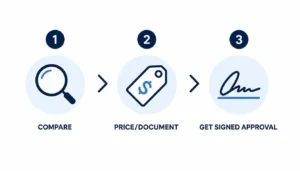
Just follow three simple step process to handle scope changes in the middle of the project:
- Compare the requested change against the written SOW.
- Price and document the change before proceeding — using current rates, not the original bid’s numbers.
- Get signed approval from the party with contractual authority before the crew acts on it — a verbal instruction from someone on-site, without documentation, is the single most common way scope creep enters a project undetected.
Get a professional scope of work that perfectly works from bid to final phase. Request SOW and estimate review from experts before your next project starts.
Conclusion
A scope of work for a construction project commonly fails because it was too vague. But that does not mean it is not fixable. A precise and detailed document is the reference point that keeps an estimate accurate and a bid defensible. Successful projects document every change against an original scope before the work continues. So, write your scopes with a high level of specificity from the start. It will help you prevent issues.