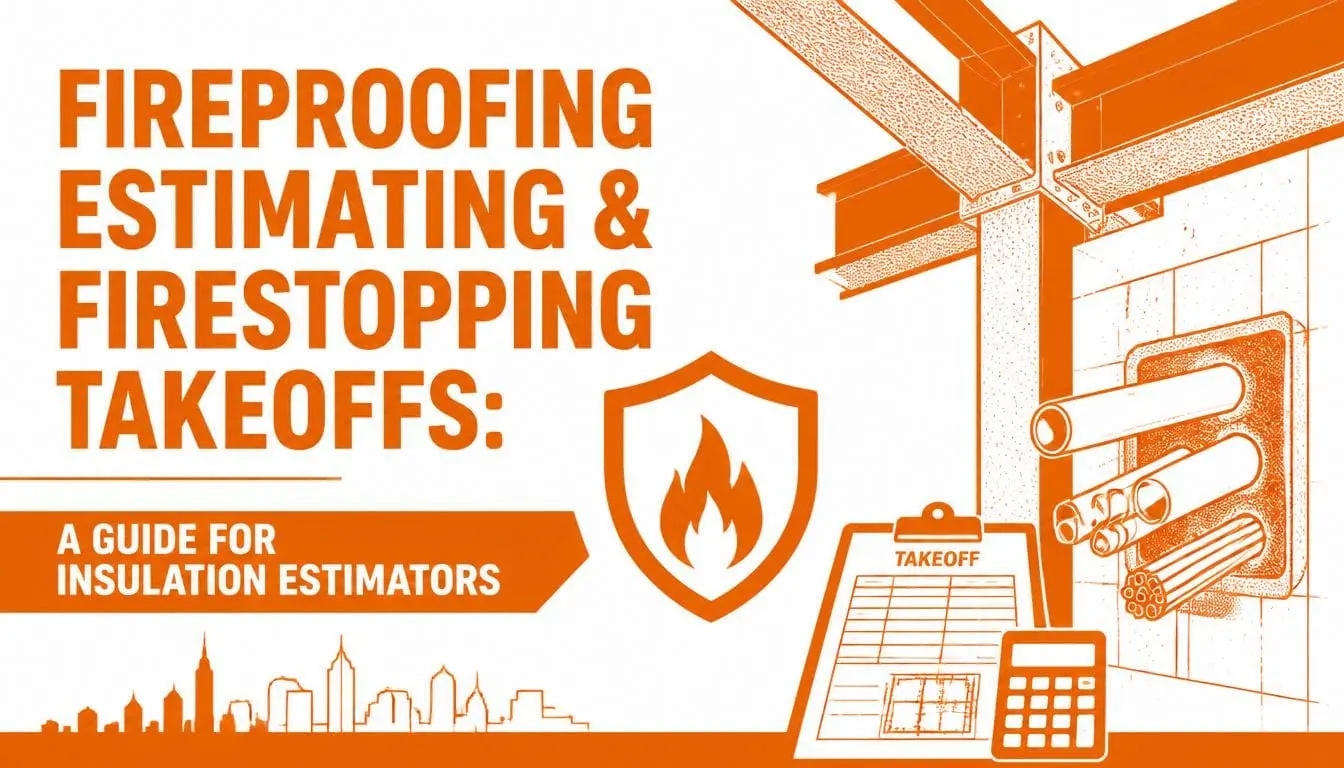
Fireproofing estimating & firestopping takeoffs are technically demanding jobs that an insulation estimator handles. A single miscalculation in linear foot of firestopping at a pipe penetration triggers costly changes. Even a slight underestimation in fireproofing quantity on a structural steel beam creates serious delay issues. Still, several estimators are relying on outdated spreadsheets and incomplete architectural drawings to estimate work. This job demands precision, so there is no room for a little error in the estimation process.
We have prepared this guide for insulation estimators who want to sharpen their takeoff methodology. Moreover, for those estimators who want to understand the material and labor variables that drive accurate fireproofing bids.
Why Fireproofing Estimating Demands a Specialist Approach
Fireproofing estimating demands the combined knowledge of the three most important things. It includes building science, material knowledge, and regulatory compliance.
This work involves highly specific performance thresholds. Every material and thickness is selected to meet a clear fire resistance rating as tested under ASTM E119.
So, even a minor miscalculation can create life-safety failures and expose contractors to severe liability. The major reasons it requires a dedicated expertise include:
- Material specificity
- Spray-applied fireproofing
- board systems
- coatings
- Code sensitivity means that the projects must match local building codes. It directly affects the material choices and thickness.
- This job is closely concerned with structural, mechanical, and architectural systems
- For precision, the installed fireproofing is inspected by a third party. It must match approved UL or FM Global designs.
Understanding the Scope: What Gets Fireproofed
Before beginning takeoffs for firestopping, it is the duty of an estimator to read the project drawings in detail with all the required specifications.
However, the scope typically includes:
1. Structural Elements
Structural steel fireproofing is the major factor that increases the cost of commercial and industrial projects. Steel beams and columns must match mandated fire resistance ratings. It depends on the types of buildings and the local code requirements. The most common solution is applying Spray-applied fireproofing (SFRM) by thickness. It is important to achieve the required rating for each steel section size.
2. Passive Fire Compartmentalization
Pipe penetration firestopping means sealing up every hole where a pipe or duct goes through a rated wall or floor. Each penetration must be sealed with a tested system. The number of these holes in large projects like hospitals can be in the thousands. So, it is necessary to be careful while evaluating.
3. Floor and Wall Assemblies
Floor and ceiling fireproofing covers the bottom side of the floors and ceilings. It depends on the design of the building, which helps the workers to use board systems or layers of different materials to complete the work.
Materials Every Estimator Must Quantify
A detailed fireproofing quantity takeoff covers multiple material categories. The major ones include:
- Intumescent coatings
- Firestop sealants
- Gypsum board fireproofing
- Mineral wool insulation
The Fireproofing Quantity Takeoff Process
Accurate fireproofing estimating depends on the steps followed. A professional estimator follows the following approach:
Step 1: Plan Review
Start with a complete analysis of structural and fire protection drawings. You must be familiar with every protection requirement:
- rated assembly
- penetration type
- structural member
For accurate analysis, they recheck the specifications found under CSI Division 07. It is necessary for material requirements and UL design numbers.
Step 2: Takeoff by Element Type
It is a must to perform a takeoff for each material category separately:
- Measure linear feet of beams and columns by the W-shape designation
- Count and categorize each penetration by type:
- wall/floor assembly type
- annular space dimension
- Calculate square footage for board and coating applications
- Measure linear footage of perimeter gaps for safing insulation
Step 3: Apply Waste Factors
Do not forget waste margin calculation because it is often neglected by the experts. Spray products almost carry a 5–15% waste factor. This figure depends on surface complexity. Keep in mind that accurate waste margins prevent costly shortfalls during construction.
Step 4: Labor Productivity Analysis
A labor cost breakdown must consider the size of the labor. Additionally, the site conditions and the productivity rates are also analyzed. Some work requires extra labor. Like penetration, firestopping requires more labor per unit. Estimators need to understand this difference to generate precise estimates.
Step 5: Bid Assembly
Bid preparation involves the combination of various things:
- material quantities
- waste-adjusted volumes
- labor hours
- equipment costs
- overhead markup
Use modern technology for More Accurate Results
Modern insulation estimating workflows have changed due to advanced digital takeoff software. The experts who use modern tools require very little manual work. This means very few errors in measurement are expected. Moreover, it also reduces the overall takeoff time.
- PlanSwift fireproofing workflows allow estimators to digitally measure:
- steel surface areas
- count penetrations
- auto-populate spreadsheet takeoffs directly from PDF drawings
- RSMeans cost data provides:
- Material and labor unit costs
- Pricing that can be adjusted for local market conditions
By using such modern tools, an estimator can create a reliable estimate that supports building code compliance at every stage.
Conclusion
The successful results depend on how carefully you read the penetration schedule and how well you understand the UL system requirements. In addition, it is also important to consider labor factors according to the needs. Estimators who can estimate this work with confidence can easily defend every line item with a traceable takeoff. They can consistently win better work at better margins. The right Fireproofing estimating can help you protect your business and buildings.